Why Banff Trail Is Worth Considering
Banff Trail sits in the northwest inner city, tucked between the University of Calgary campus to the west and McMahon Stadium to the south. Its location puts residents within minutes of two major anchors: the university district and the Foothills Medical Centre corridor. That dual draw has made Banff Trail one of the most consistently in-demand communities in NW Calgary, appealing equally to faculty, medical professionals, and long-term owner-occupants who value walkable urban living without paying Kensington or Hillhurst premiums.
The neighbourhood has a quiet, residential character despite its proximity to major institutions. Streets are lined with mature elm and ash trees, and the lot grid is generous enough that even newer infill homes have meaningful front yards and street presence. Confederation Park, one of Calgary's largest urban parks, is a short walk or cycle to the northeast, providing green space that inner city communities much closer to the core simply cannot match.
Banff Trail is also one of the few NW inner city communities with direct CTrain access on the Red Line, making it genuinely car-optional for commuters heading downtown. That combination of transit, green space, institutional proximity, and established character gives Banff Trail a well-rounded appeal that holds value across market cycles.
Banff Trail Housing Market: Prices and Property Types
The Banff Trail housing stock is a mix of original mid-century bungalows and split-levels alongside a growing supply of modern infill product. Original bungalows on 50-foot lots typically range from $550,000 to $700,000 depending on condition and lot depth. These properties attract two distinct buyer profiles: owner-occupants who renovate and hold, and investors or builders who acquire them as land plays for future infill development.
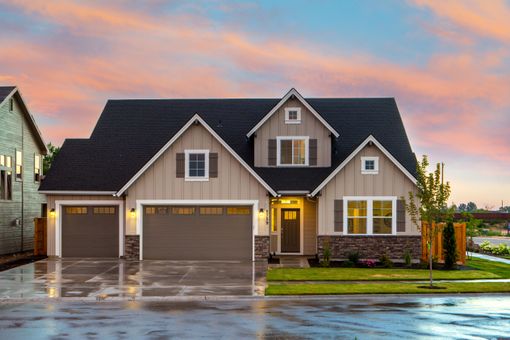
Infill semi-detached homes, by far the most common new construction format in the community, are priced between $680,000 and $820,000 per side. Full detached infill homes on consolidated or wider lots command $850,000 to $1.1 million, with the upper end representing custom builds with premium finishes and secondary suite configurations. The 50-foot lot grid means most R-CG lots subdivide cleanly into semi-detached pairs, which is why that product type dominates new construction here.
Absorption of new infill product has been strong. Builders active in Banff Trail typically pre-sell or sell within 60 to 90 days of completion, reflecting sustained demand from buyers who want new construction quality in an established NW community. Resale inventory is tight, and properties priced correctly tend to receive multiple offers within the first week on market.
Banff Trail's Banff Trail CTrain station (Red Line) gives residents a direct connection to downtown Calgary without a vehicle, a rare advantage in the NW inner city that meaningfully supports rental demand and long-term property values.
Schools, Transit, and Amenities
Banff Trail Elementary School serves the community's younger children within a walkable distance from most of the neighbourhood. Colonel Irvine School, a K-9 CBE school, is located just east of the community and provides a natural progression for older students. The University of Calgary is effectively within walking distance of the western edge of Banff Trail, and its presence shapes the community's character significantly, bringing a higher density of educated professionals and students who become long-term renters or eventual buyers.
Transit is a genuine strength. Banff Trail CTrain station on the Red Line sits at the southern edge of the community along Crowchild Trail, providing fast service to downtown and to the south. Multiple bus routes connect to 16th Avenue NW, giving residents access to the broader city grid. Cyclists have access to the 10th Street NW separated bikeway corridor, which connects directly to the inner city pathway network and downtown.
Amenities within or immediately adjacent to the community include North Hill Centre to the east, which provides grocery, pharmacy, and retail services. The University District development just west of the campus is adding new restaurants, cafes, and retail that Banff Trail residents are well-positioned to access. Confederation Park and the Confederation Park Golf Course provide substantial recreational green space, and Nose Hill Park is accessible within a short drive to the north.

Infill and Investment Outlook
Banff Trail's R-CG zoning, which now applies broadly across the community following the City of Calgary's blanket rezoning initiative, has unlocked a significant pipeline of infill development. The 50-foot lot grid is ideal for semi-detached infill pairs, and builder interest in the community has been consistently high due to the strong absorption and premium pricing that Banff Trail supports relative to other NW communities further from the core.
For investors, the rental fundamentals are as strong as anywhere in NW Calgary. The proximity to the University of Calgary and Foothills Medical Centre creates a deep pool of professional and graduate-student renters who typically sign one- to two-year leases and take strong care of properties. Basement suites in new infill homes in Banff Trail are essentially never vacant, with demand outpacing supply in virtually every quarter. Gross rental yields on well-located semi-detached infill with legal suites typically run in the range of 4.5 to 5.5 percent before expenses.
Builder and investor activity is likely to continue intensifying in the near term as lot supply in closer-in NW communities like Rosemont and Capitol Hill is absorbed. Banff Trail still has meaningful original stock that has not yet been redeveloped, representing an ongoing pipeline for infill projects over the next several years. Buyers who acquire original bungalows for land value today are generally well-positioned for either a build-and-sell or a build-and-hold strategy.
Is Banff Trail Right for You?
Banff Trail is best suited to buyers who want the convenience of NW inner city living with transit access, without paying the premium associated with Kensington, Hillhurst, or West Hillhurst. It is particularly well-matched to professionals working at the University of Calgary, Foothills Medical Centre, or Alberta Children's Hospital, all of which are within a short commute. Families appreciate the tree-lined streets, the proximity to Confederation Park, and the school options within the community.
Investors looking for strong rental demand and steady appreciation should view Banff Trail as one of the more defensible NW inner city positions available. The institutional anchors provide a demand floor that pure residential communities cannot replicate. The CTrain access adds a layer of long-term value support as Calgary's transit-oriented development policy continues to direct density toward station areas.
The main trade-off is that Banff Trail does not have a strong walkable commercial strip within the community itself. Residents rely on North Hill Centre, the university area, and 16th Avenue NW for most retail and dining, which requires a short drive or transit trip. For buyers who prioritize a walk-score lifestyle with restaurants and cafes immediately on their street, Banff Trail is not the top answer. But for those who value green space, transit access, and institutional proximity, it is one of the most complete inner city communities in the northwest.
Data referenced in this article draws from CREB monthly statistics and City of Calgary planning records as of May 2026.